
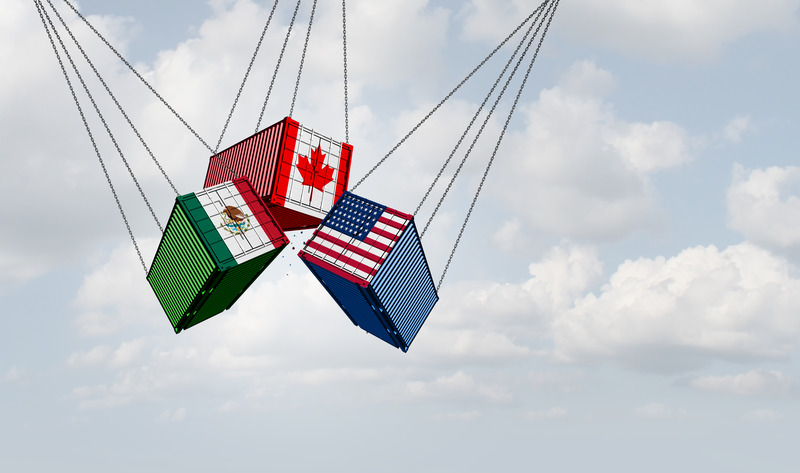
What Is Happening on July 1, 2026?
The upcoming July 1, 2026, milestone is not simply a routine meeting. It is a formal Joint Review required under Article 34.7 of the USMCA. At this checkpoint, the United States, Mexico, and Canada must confirm in writing whether they intend to extend the agreement.
If all three countries agree, the framework continues with stability. If one or more parties hesitate, the agreement does not immediately end—but it transitions into an annual review cycle that can extend through 2036.
This creates a different kind of risk. Instead of a clear outcome, markets face a rolling timeline of more policy uncertainty.
This article from LFA examines the 2026 USMCA “checkpoint,” why it could contribute to 2026 market volatility, and how Swiss wealth strategies may offer a way to manage that uncertainty.
Why the “Annual Renewal” Scenario Matters
Markets tend to react less to events themselves and more to the uncertainty surrounding them. The annual renewal structure introduces a moving target that complicates long-term planning.
Large industries—especially automotive, agriculture, and manufacturing—depend on multi-year capital investment decisions. When trade rules are unclear, companies may delay expansion, adjust supply chains, or reprice risk.
This hesitation can ripple into:
- Lower capital expenditures
- Slower earnings growth expectations
- Increased pricing pressure
- Shifts in global supply chains
For investors, this environment often leads to uneven market reactions. Some sectors adjust quickly, while others struggle to adapt.
What Key Sectors Are at Risk—and Where Volatility May Appear First
Automotive & Machinery
The automotive sector sits at the center of USMCA negotiations. One of the most sensitive areas involves rules of origin, which determine how much of a product must be made within North America to qualify for favorable tariff treatment.
If these thresholds rise, manufacturers may face higher production costs or need to restructure supply chains. This can lead to:
- Margin compression
- Delays in production planning
- Changes in supplier relationships
For publicly traded companies, these adjustments may show up quickly in earnings revisions and stock performance.
Energy & Digital Trade
The 2026 review is not limited to traditional trade categories. It is increasingly tied to what could be described as a broader “security architecture.”
Areas under focus include:
- Semiconductor supply chains
- AI-related infrastructure
- Energy distribution and cross-border regulation
These sectors are closely linked to national policy priorities. As a result, trade discussions may extend beyond tariffs into restrictions, incentives, and regulatory alignment. That added layer can increase volatility, particularly in technology and energy equities.
The K-Shaped Impact
Trade shifts rarely affect all businesses equally. Instead, they tend to create a K-shaped outcome, where some companies benefit while others face pressure.
Potential winners may include:
- Domestic manufacturers
- Firms with localized supply chains
- Businesses aligned with national policy incentives
Those facing challenges may include:
- Import-dependent retailers
- Companies reliant on cross-border efficiency
- Firms with thin margins exposed to tariffs
This divergence can lead to uneven market performance, even within the same sector.
The Currency Impact: USD vs. a Global Safe Haven
Purchasing Power and Trade Tensions
Trade disputes typically extend beyond goods and services. They can influence currency behavior and, over time, affect the buying power of a dollar.
When tariffs increase costs, inflationary pressures may follow. At the same time, policy uncertainty can influence capital flows and investor sentiment toward the U.S. dollar.
This combination may contribute to:
- Reduced real purchasing power domestically
- Increased volatility in currency markets
- Shifts in global capital allocation
For example, the U.S. dollar struggled after the “Liberation Day” tariff announcements in April 2025, with the dollar index declining significantly, one of its steeper drops in recent years. By early 2026, it hit four-year lows against major currencies, prompting investors to flee to traditional havens such as gold and the Swiss franc.
Why Investors Look at Swiss Francs During Trade Uncertainty
Periods of trade friction can lead investors to consider alternative currencies. One commonly discussed option is investing in Swiss francs.
The reasoning is not based on short-term performance, but on structural characteristics:
- Switzerland’s political neutrality
- A long-standing focus on fiscal discipline
- A stable financial system with global credibility
Interest in how to invest in Swiss francs has increased during this period of geopolitical or trade-related tension.
The Swiss Franc as a Counterbalance
In contrast to North American trade uncertainty, the Swiss franc has historically been viewed as a more stable currency during global disruptions.
For some investors, this creates a different perspective on portfolio construction. Instead of relying solely on dollar-based exposure, they seek currency diversification, with Swiss investment playing a key role in a broader allocation framework.
Navigating the “Fireworks Show”: Strategic Investment Responses
Don’t Fear the Noise
Trade negotiations often resemble a fireworks display—frequent bursts of headlines, sharp reactions, and evolving narratives.
While short-term movements can feel dramatic, long-term outcomes are typically more measured. Historically, trade agreements have more often been renegotiated than abandoned outright, though outcomes can vary.
Diversification Beyond USMCA
In a trade environment that is becoming more policy-driven, relying on a single region or currency introduces concentration risk.
Geographic diversification is no longer just a theoretical concept. It is becoming a practical consideration for managing exposure to:
- Policy shifts
- Trade disputes
- Currency fluctuations
How Swiss Wealth Management Fits In
For high-net-worth investors considering global opportunities, Swiss wealth strategies provide a unique perspective.
This can include:
- Multi-currency portfolio construction
- Access to non-U.S. markets
- Custody in established financial jurisdictions
For example, Swiss bank accounts for U.S. citizens are legal and compliant when properly reported, and they can provide access to diversified currency holdings.
Swiss wealth management strategies prioritize balancing growth, currency exposure, and risk across various regions.
Your 2026 Trade Risk Checklist
To keep things practical, here are three areas you may want to review:
- Monitor July 1 Joint Review outcomes: Pay attention to whether all three countries confirm continuation or signal changes.
- Assess exposure to North American supply chains: Identify which holdings rely heavily on cross-border trade between the U.S., Mexico, and Canada.
- Evaluate currency concentration: Consider whether your portfolio is heavily tied to a single currency and whether diversification may be appropriate.
LFA Perspective
The current environment is a reminder that trade policy, currency behavior, and market performance are increasingly connected.
The LFA team works with U.S. investors who are evaluating international diversification, including access to Swiss-based financial solutions and multi-currency portfolios.
This includes exploring how global positioning, rather than domestic concentration, influences your individual goals and objectives.
If you have questions about how trade developments affect your portfolio, please get in touch with us to schedule a consultation.
To learn more about how LFA’s Swiss wealth managers are helping U.S. investors, download this free brochure.

FAQs
What Is the USMCA Joint Review in 2026?
It is a required review under Article 34.7, in which the U.S., Mexico, and Canada decide whether to extend the agreement or enter an annual review cycle.
How Could USMCA Changes Affect Markets?
Changes to trade rules can impact supply chains, corporate margins, and investor expectations, which may lead to increased market fluctuations.
Why Do Trade Tensions Affect Currencies?
Trade disputes can influence inflation, capital flows, and investor sentiment, all of which may affect currency values over time.