Stock market swings get plenty of attention in retirement planning, but currency risk is easier to overlook. Over a retirement that may last 20 to 30 years or longer, inflation and a weaker U.S. dollar reduce purchasing power and increase the cost of living.
Holding wealth almost entirely in U.S. dollars also introduces single-currency concentration. Persistent inflation, rising federal debt, and geopolitical risk have made that concentration more relevant for globally minded investors.
Are there ways to hedge against U.S. dollar weakness? One option is to allocate a portion of a liquid portfolio to Swiss-franc-denominated assets, global investments, or multi-currency accounts.
This guide from LFA examines how a weakening dollar can affect retirement savings and how Swiss-franc holdings can be incorporated into a global wealth strategy.
How Can a Weak U.S. Dollar Impact Your 401(k) and IRA?
A weaker dollar doesn’t automatically mean a 401(k) or IRA will decline in value. The bigger concern is what those dollars can buy, especially when retirement assets and income remain heavily concentrated in U.S. currency.
Purchasing Power
Currency depreciation can make imported products and international services more expensive in dollar terms. Travel abroad becomes costlier when the dollar buys fewer units of another currency, while imported goods and some healthcare-related costs can also face currency-related price pressure.
For retirees drawing from accumulated savings, purchasing power matters because the portfolio may need to finance expenses for several decades.
What Can Weaken the Dollar?
Several economic forces can influence the dollar’s value. Persistent federal deficits and rising government debt can affect perceptions of U.S. fiscal conditions, while domestic inflation reduces the real purchasing power of money.
The dollar nevertheless remains the world’s dominant reserve currency. At the same time, some countries and institutions have gradually expanded their use of other currencies and reserve assets, making the global currency landscape less exclusively dollar-centered.
Home-Country Concentration
Currency risk can overlap with home-country bias. A portfolio concentrated in U.S. securities, U.S. financial institutions, and U.S. dollars depends heavily on one country’s economic and monetary backdrop. Adding non-U.S. holdings does not eliminate those risks, but it can distribute part of the portfolio across additional markets and currencies.
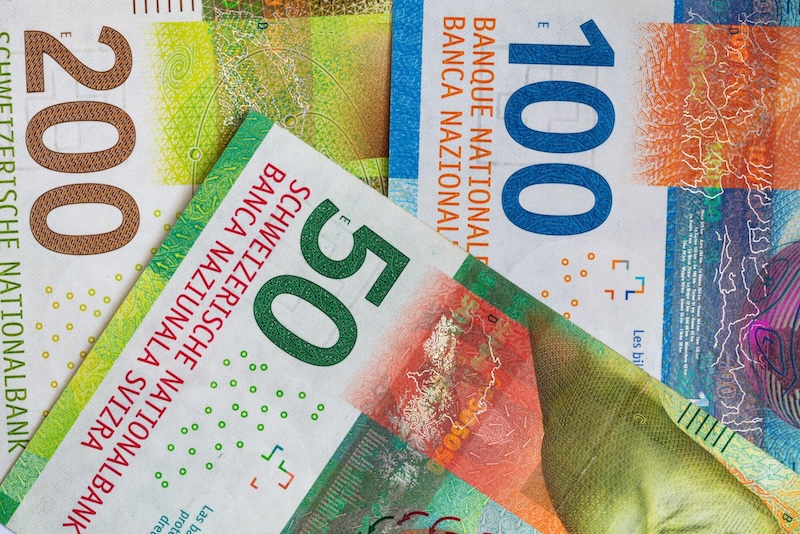
Currency Comparison: Is the Swiss Franc Stronger Than USD?
The Swiss franc has appreciated substantially against the U.S. dollar across longer historical periods.
Based on Federal Reserve exchange-rate data, the U.S. dollar has declined approximately 35% against the Swiss franc over the past 20 years and 17% over the past 10 years. However, exchange rates fluctuate, and past appreciation does not mean CHF will always rise against USD.
Several characteristics have contributed to the franc’s longstanding reputation as a safe-haven currency.
Switzerland’s Debt Brake
Switzerland operates under a constitutionally anchored “debt brake” intended to keep federal spending and revenue in balance across the economic cycle. This fiscal framework has helped Switzerland maintain comparatively low public debt.
Price Stability
Switzerland has a long history of relatively low inflation. The Swiss National Bank defines price stability as inflation between 0% and 2% over the medium term. This record of price stability is one factor behind the Swiss franc’s reputation as a strong global currency.
Safe-Haven Characteristics
Switzerland’s political stability, strong financial institutions, fiscal discipline, and history of neutrality have contributed to the Swiss franc’s reputation as a safe-haven currency. During periods of economic or geopolitical uncertainty, global demand for the franc has historically increased.
How To Invest in Swiss Francs To Hedge U.S. Dollar Inflation
Buying physical Swiss currency is not the only way to gain CHF participation. Depending on the investment objectives, there are several ways to add currency exposure.
1. Swiss-Franc-Denominated Assets
A portfolio can hold CHF cash or Swiss-franc-denominated fixed-income securities. This introduces direct currency participation alongside dollar-based holdings. Returns will still depend on interest rates, security prices, and movements between CHF and USD.
2. Multi-Currency Global Portfolios
Another method combines holdings across different markets and currencies. Global equities, fixed income, cash, and other assets can reduce dependence on the performance of a single currency or domestic market.
Importantly, the currency in which a stock is quoted does not necessarily determine its underlying economic currency exposure. Revenue sources, business operations, and hedging policies are key drivers.
3. Swiss-Based Custody and Wealth Management
A Swiss custodial account can hold investments and currencies outside the U.S. financial system while remaining fully transparent under U.S. tax and reporting rules.
LFA works exclusively with U.S. clients and maintains relationships with Swiss custodian banks. This arrangement can combine Swiss-based custody with active currency allocation and global portfolio management.
USD-Only Retirement vs. a Multi-Currency Swiss Franc Hedge
A CHF allocation changes the sources of currency and jurisdictional exposure within a portfolio.
| Portfolio Feature | USD-Concentrated Portfolio | Multi-Currency/CHF Allocation |
| Currency Risk | Primarily tied to USD | Spread across USD, CHF, and potentially other currencies |
| Purchasing Power | More dependent on the dollar | Additional currency sources can offset some USD weakness |
| Jurisdiction | Primarily U.S.-based | Can include U.S. and Swiss custody |
| Monetary Policy | Primarily influenced by Federal Reserve policy | Exposure can span Fed, SNB, and other central-bank policies |
How Does LFA Help U.S. Clients Diversify Retirement Capital?
LFA is an independent Swiss wealth manager specializing in U.S. clients seeking access to international markets, currencies, and Swiss-based custody. We are registered with the U.S. Securities and Exchange Commission and operate within Switzerland’s regulated financial sector.
Working with LFA can include:
- Multi-currency portfolio management: CHF, USD, and other currency allocations can be incorporated according to individual circumstances and investment objectives.
- Swiss-based custody: Relationships with Swiss custodian banks may provide U.S. clients with access to non-U.S. custody, subject to each custodian’s acceptance criteria and applicable FATCA and IRS requirements.
- Global investment management: Portfolios can combine U.S. and international securities, fixed income, cash, and other asset classes.
- U.S.-oriented reporting: LFA prepares reporting intended to work alongside annual U.S. tax filings and domestic tax professionals.

FAQs
Can a U.S. Citizen Hold Swiss Francs in Switzerland?
Yes. U.S. citizens can legally hold Swiss-franc-denominated assets with Swiss financial institutions that accept American clients, subject to applicable U.S. tax and foreign-account reporting requirements.
How Does a Weak Dollar Affect My Retirement?
A weaker dollar reduces purchasing power relative to other currencies, which can raise the cost of imported goods, international travel, and other foreign expenses. Over a retirement lasting several decades, persistent dollar weakness can be particularly relevant when savings and income are concentrated in U.S. currency.
Does Buying Swiss Francs Automatically Protect Against Inflation?
No. Swiss-franc holdings do not automatically protect against inflation. However, CHF exposure can diversify currency risk and reduce reliance on the U.S. dollar. Exchange rates fluctuate, so the franc can also decline against the dollar during certain periods.
Why Is the Swiss Franc Considered a Safe-Haven Currency?
Switzerland’s political stability, relatively low government debt, history of low inflation, and strong financial institutions have contributed to the franc’s safe-haven reputation. During periods of economic or geopolitical stress, demand for CHF has historically increased, although its value still fluctuates against other currencies.
Could Swiss Francs Have a Role in Your Retirement Portfolio?
A retirement plan built for several decades has to account for more than stock and bond performance. Currency movements can influence purchasing power, international expenses, and the real value of accumulated wealth.
If you’re concerned about relying heavily on the U.S. dollar, a measured allocation to Swiss francs and other global assets can add another source of currency and geographic diversification.
Contact LFA to discuss whether multi-currency portfolio management might align with your retirement objectives.
Disclaimer: This communication is for informational and educational purposes only and does not constitute investment, legal, or tax advice, a recommendation, or an offer or solicitation to buy or sell any security or financial product. Account eligibility, acceptance, minimum asset requirements, services, fees, and onboarding procedures vary by financial institution and are subject to applicable law, internal policies, due diligence, and approval. Laws, regulations, tax rules, filing thresholds, and institutional practices may change, including after the date of publication. Readers should consult qualified U.S. and Swiss legal and tax professionals regarding their individual circumstances. International investing and holding assets with a foreign financial institution involve additional risks and limitations, including currency fluctuations, political and economic uncertainty, differing regulatory and custody regimes, tax reporting obligations, transfer restrictions, and potential loss of principal. Diversification does not ensure profit or protect against loss. Past performance is not indicative of future results. LFA SA is an SEC-registered investment adviser. SEC registration does not imply a certain level of skill or training and does not constitute an endorsement by the U.S. Securities and Exchange Commission. Please refer to LFA SA’s Form ADV for information about its advisory services, fees, conflicts of interest, and associated risks.